
%202.svg)
Over the past decade, consumer behavior has shifted dramatically. Buyers increasingly prefer to research products online, compare prices instantly, and expect seamless digital experiences. For SME owners, this presents both an opportunity and a challenge. The opportunity lies in accessing markets far beyond a physical location. The challenge lies in building an online store that is reliable, efficient, and capable of delivering value to customers.
However, launching an online store is only the beginning. Many businesses underestimate the operational and strategic decisions that influence long-term success. Choosing the right platform, ensuring secure payment systems, managing inventory, and delivering strong customer experience all play critical roles.
This article explores five critical e-commerce success factors that every startup or SME should consider when expanding into online sales. Before diving into these factors, it is useful to understand how e-commerce is evolving globally and how Armenia fits into this growing digital landscape.
The Global Growth of E-Commerce
Over the last decade, digital commerce has expanded rapidly due to technological advancements, improved payment systems, and changing consumer behavior.
Recent ecommerce growth statistics show that the online shopping market continues to grow rapidly, outpacing traditional retail sales and reshaping the global retail landscape. In the next paragraph, we will explore the recent and projected online shopping rates from 2022 to 2028, providing insights into the trends and factors driving this significant transformation in consumer behavior and retail dynamics.
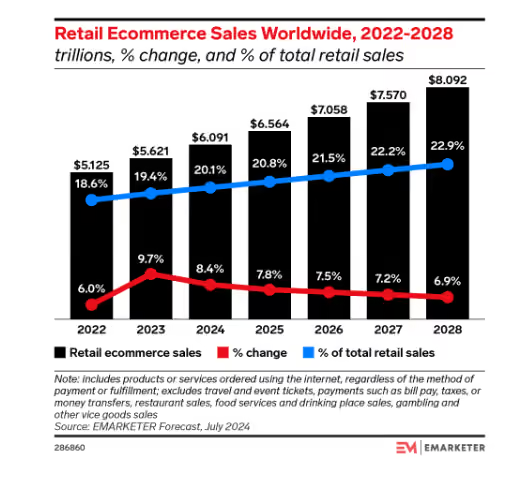
According to Shopify Global ecommerce sales are forecast to grow from $7.05 trillion in 2026, to $8.09 trillion by 2028.
Ecommerce sales in 2026 are expected to make up 21.1% of total retail sales. By 2028, that number will grow to 22.5%.
China, the United States, and Western Europe are the largest contributors to global ecommerce, with sales from these three regions totaling more than $5.17 trillion in 2025.
In 2024, more than 75% of internet users shopped online. By 2028, 50% of the global population 14 and older will be online shoppers.
Several major trends are shaping global e-commerce today
- Mobile commerce growth. More consumers shop directly from smartphones.
- Cross-border online trade. Businesses increasingly sell internationally through digital platforms.
- Personalized customer experiences. Data and artificial intelligence help companies tailor recommendations.
- Faster delivery expectations. Logistics and fulfillment capabilities are becoming a competitive advantage.
Jeff Bezos, founder of Amazon, once famously said: “If you build a great experience, customers tell each other about that. Word of mouth is very powerful.”
This statement reflects a key reality of digital commerce: success depends on delivering consistent value and trust to customers.
E-Commerce Development in Armenia
Armenia’s e-commerce market is still early-stage but growing fast, with forecasts projecting nearly $900M in market size by 2027. (Reference:https://www.trade.gov/country-commercial-guides/armenia-ecommerce).
According to the EU4Digitalreport on e-commerce in Armenia, online trade in the country has been expanding steadily due to increasing internet penetration, digital payment adoption, and the growing presence of online marketplaces. The report highlights that Armenian businesses have started to view e-commerce not only as a marketing tool but as a full-scale sales channel.
The report notes that Armenia has made significant progress in digital infrastructure and payment systems, which are essential foundations for online commerce.
Parallelly, SMEs increasingly recognize e-commerce as a way to reach international customers.
The same report also highlights that logistics, digital trust, and regulatory frameworks remain important areas for further development in Armenia’s e-commerce ecosystem.
Despite these challenges, the direction is clear. Armenian businesses are gradually embracing digital trade. For SME owners, this creates a timely opportunity to enter the market while it is still developing.
Understanding the core e-commerce success factors can help businesses build strong foundations for growth.
1. Choosing the Right E-Commerce Platform
The first and most critical decision for an online business is selecting the right e-commerce platform. This technology acts as the backbone of the entire operation.
Popular platforms such as Shopify, WooCommerce, and Magento provide tools for managing products, payments, and customer interactions.
However, each platform serves different business needs. SME owners should evaluate several factors before making a choice:
- Scalability – Can the platform support growth as the business expands?
- Integration capabilities – Does it connect easily with payment systems, logistics tools, and marketing software?
- Ease of use – Can non-technical teams manage the store efficiently?
- Cost structure – Are the subscription fees, transaction costs, and customization expenses sustainable?
For example, many startups choose Shopify because it offers a user-friendly interface and built-in tools that simplify the early stages of online retail. Larger companies, however, may prefer more customizable platforms that allow deeper integration.
Choosing the right platform early reduces the need for expensive migrations later. It also helps businesses focus on growth instead of technical limitations.

Below are examples of successful businesses built on Shopify, across different industries.
Armenian brands using Shopify:
- Cole Haan (Armenia online store)
- Pregomesh Favorites
Many established and large-scale online retailers use Magento (now also known as Adobe Commerce) because it offers high customization, scalability, and enterprise-level integrations. It is particularly popular among companies that manage large product catalogs, complex inventory systems, or global operations.
Below are several well-known brands that use Magento as their e-commerce platform.
- Christian Louboutin
- Land rover (gear store)
- HP (regional online stores)
- Sigma Beauty
- Helly Hansen
Why Large Brands Choose Magento
Companies typically choose Magento when they need:
- Advanced customization
- Large catalog management
- Complex integrations with ERP systems
- Multi-store / multi-country e-commerce
- High scalability
Armenian Companies Using Magento
2. Customer Experience (UX and Navigation)
Customer experience is one of the strongest drivers of the e-commerce success. In physical retail, customers evaluate products by visiting a store. In e-commerce, the website itself becomes the store.
A well-designed digital experience helps customers find products quickly and complete purchases with minimal friction.
Key elements of strong e-commerce user experience include:
- Simple and intuitive navigation
- Fast loading pages
- Mobile-friendly design
- Clear product descriptions and images
- Transparent pricing and delivery information
Research by PwC shows that 73% of consumers say customer experience is an important factor in their purchasing decisions.
Small improvements can have a significant impact. For example, simplifying the checkout process or reducing loading times can increase conversion rates and reduce abandoned carts.
A useful rule for SME owners is simple: if customers struggle to find or purchase products online, they will likely leave the store and buy elsewhere.
3. Logistics and Inventory Management
Reliable logistics is often the most underestimated aspect of e-commerce. However, it is one of the most visible elements of customer satisfaction.
Customers expect orders to arrive on time, products to be available, and returns to be handled efficiently.
For many startups, managing logistics becomes complex as order volumes grow. Without proper inventory systems, businesses may experience stock shortages or delayed deliveries.
A well-organized logistics strategy should include:
- Real-time inventory tracking
- Reliable supplier relationships
- Clear fulfillment processes
- Transparent delivery options
Some successful startups use integrated inventory systems that automatically update stock levels across sales channels. This prevents overselling and improves operational efficiency.
Another important trend is the use of third-party logistics providers. These partners help companies manage warehousing and shipping, allowing startups to focus on marketing and customer experience.
4. Payment Options and Security
Payment infrastructure is another essential component of e-commerce success. Customers expect flexible and secure ways to complete transactions.
If payment systems are limited or unreliable, many potential buyers will abandon the checkout process.
Local payment options are:
- Idram (wallet + payments)
- Telcell Wallet
- EasyPay
- ArCa (national card processing network)
Bank & card payments
- Visa
- Mastercard
Mobile payments
- Apple Pay
- Google Pay
Local wallets like Idram and Telcell are widely integrated with e-commerce websites and services.
Security is equally important. Consumers need confidence that their financial information is protected.
According to Deloitte, concerns about data security remain one of the main reasons customers hesitate to shop online.
Businesses should therefore invest in secure payment gateways, encrypted transactions, and fraud detection tools. Trust signals such as security certificates and clear refund policies also help reassure customers.
In emerging e-commerce markets, building trust is often just as important as offering competitive prices.
5. Data, Automation and Marketing
Modern e-commerce businesses rely heavily on data to guide decisions and optimize performance. Digital marketing in Armenia is one of the key communication tools between brands and audiences. According to Data Reportal, by the end of 2025 Armenia had 2.36 million internet users — 80% of the country’s population.
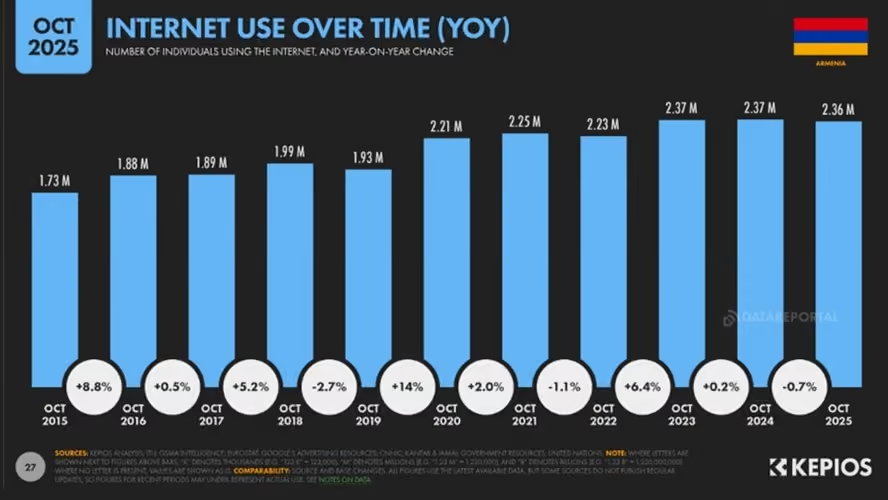
With high internet and social media adoption, online platforms have become the primary channel for brand-consumer interaction.
The most widely used communication and promotion channels include:
- Meta (Facebook / Instagram) – a dominant ecosystem in Armenia. Facebook alone has over 2.4 million users, reaching more than 80% of the population, while Instagram has around 1.3–1.45 million users, representing roughly 44–49% of the population making social platforms a key channel for brand discovery and customer engagement (reference: https://stats.napoleoncat.com/social-media-users-in-armenia/2025)
- Google Ads – widely used for search marketing, product discovery, and display advertising, especially for high-intent purchases.
- TikTok Ads – a rapidly growing platform, particularly effective for reaching younger audiences and lifestyle brands.
Digital platforms generate valuable insights about customer behavior, including browsing patterns, purchasing trends, and product popularity. When used effectively, this data can improve marketing efficiency and customer engagement.
Automation tools allow businesses to scale operations without increasing costs significantly. For example, automated marketing systems can:
- Send personalized email campaigns
- Recommend products based on browsing behavior
- Recover abandoned carts
- Segment customers based on purchasing history
For example, personalized recommendations have become a major driver of online sales. According to McKinsey & Company, personalization can increase revenue by 10–15% in many digital businesses.
For SME owners entering e-commerce, investing in analytics tools and automation platforms can significantly improve customer engagement and long-term growth.
E-commerce businesses can boost growth by using analytics and automation tools to track performance and engage customers efficiently:
- Google Analytics – tracks visitor behavior, traffic sources, and conversions.
- Hotjar / Microsoft Clarity – visualizes user interactions with heatmaps and session recordings.
- Mailchimp / Klaviyo / HubSpot – automates email campaigns, abandoned cart reminders, and personalized messaging.
- Zapier / Make – integrate systems, automate workflows, and sync data across platforms.
Combining analytics and automation allows businesses to make data-driven decisions, improve customer engagement, and scale operations effectively.
Conclusion
E-commerce offers tremendous opportunities for SMEs looking to expand their business beyond traditional channels. However, success requires thoughtful planning and the right strategic priorities.
Understanding the core e-commerce success factors can help startups avoid common pitfalls and build sustainable online operations.
Key Takeaways
- Choose the right platform early. It should support growth, integrations, and operational efficiency.
- Prioritize customer experience. A clear, fast, and intuitive website increases conversions.
- Develop reliable logistics systems. Efficient inventory management and delivery build trust.
- Offer secure and flexible payments. Customers expect convenience and strong security.
- Use data and automation. Analytics and marketing tools help scale growth effectively.
For Armenian businesses, the digital commerce landscape is still evolving. This means there is significant room for innovation and market entry. By focusing on these success factors, SME owners can position themselves to compete effectively in the growing online economy.




.avif)


.avif)