.avif)
%202.svg)
When you think about your favorite businesses, what stands out? It’s rarely just the product or service. It’s the feeling they create: trust, connection, and sense of inspiration. That’s the true power of branding.
For SMEs, branding matters even more. It’s your opportunity to tell your story clearly, stand out in a crowded market, and build meaningful, long-term relationships with your customers.
This article explores why developing a robust brand identity is a necessity. We will break down what branding is, why it matters specifically for Armenian companies going global; share practical strategies to build a brand with a limited budget. You will learn how to approach branding step by step, when to work with professionals, and how to use digital tools to create or improve your visual identity.
Branding vs Visual Identity System (VIS)
A VIS is the visual language your brand speaks. It includes your logo, your color palette, typography, imagery style, packaging design, and even the layout of your invoices. It is the cohesive aesthetic that makes your business instantly recognizable across different platforms, from your Instagram feed to your product packaging on a shelf in any other city.
Branding, on the other hand, is the soul behind that face. It encompasses your values, your voice, your customer service philosophy, and the promise you make to your customers. As Amazon founder Jeff Bezos famously put it, “Your brand is what other people say about you when you're not in the room.” That definition captures its power.
Together, these elements create consistency. And consistency builds recognition and trust.
Why Branding Matters for All Companies
Branding is often associated with large corporations. Think of global giants with strong visual identities and clear messaging. But branding is equally important for small and medium enterprises. Here’s why:
- It builds trust. Buyers prefer companies that look established and consistent
- It creates recognition. A strong brand helps customers remember you.
- It supports pricing power. Branded businesses compete on value, not only on price.
- It aligns internal culture. A clear brand clarifies your mission and values for your team.
Research by McKinsey& Company shows that companies that invest in brand and customer experience outperform competitors in revenue growth.
Even for SMBs, branding influences:
- Investor perception
- Partnership opportunities
- Talent attraction
- Customer loyalty
Without branding, your company becomes interchangeable. With branding, it becomes distinctive.
Why Branding Is Crucial When Going Global
For an Armenian SME entering global markets, a professional visual system signals readiness and reliability.
International expansion brings new competitors, regulations, and expectations and in this environment, branding becomes a strategic advantage. In global markets, first impressions often happen online, where your visual identity and messaging shape credibility. Strong branding helps you highlight your niche expertise, agility, and unique value. Ultimately, a well-defined brand strengthens your negotiating power and serves as an important factor to shift perception from just another supplier to a trusted international partner.
How Armenian SMEs Can Build Strong Branding
Define your brand identity by asking these questions:
What is your mission?
Why does your business exist, and what do you aim to achieve? Draft your mission statement by identifying the “why” behind your brand. Then, outline your vision to capture your long-term goals.
What are your values?
What principles guide your business? Are you playful, innovative, or dependable? Identify traits that resonate with your target audience and shape your brand’s unique voice.
Avoid generic phrases like “high quality” or “innovative solutions.”
Who is your audience?
What are your customers’ needs, wants, and values? Create detailed buyer personas or conduct
How to Build Your Brand: Two Paths
Generally, there are two main routes for an SME owner, each valid depending on your stage of growth and resources.
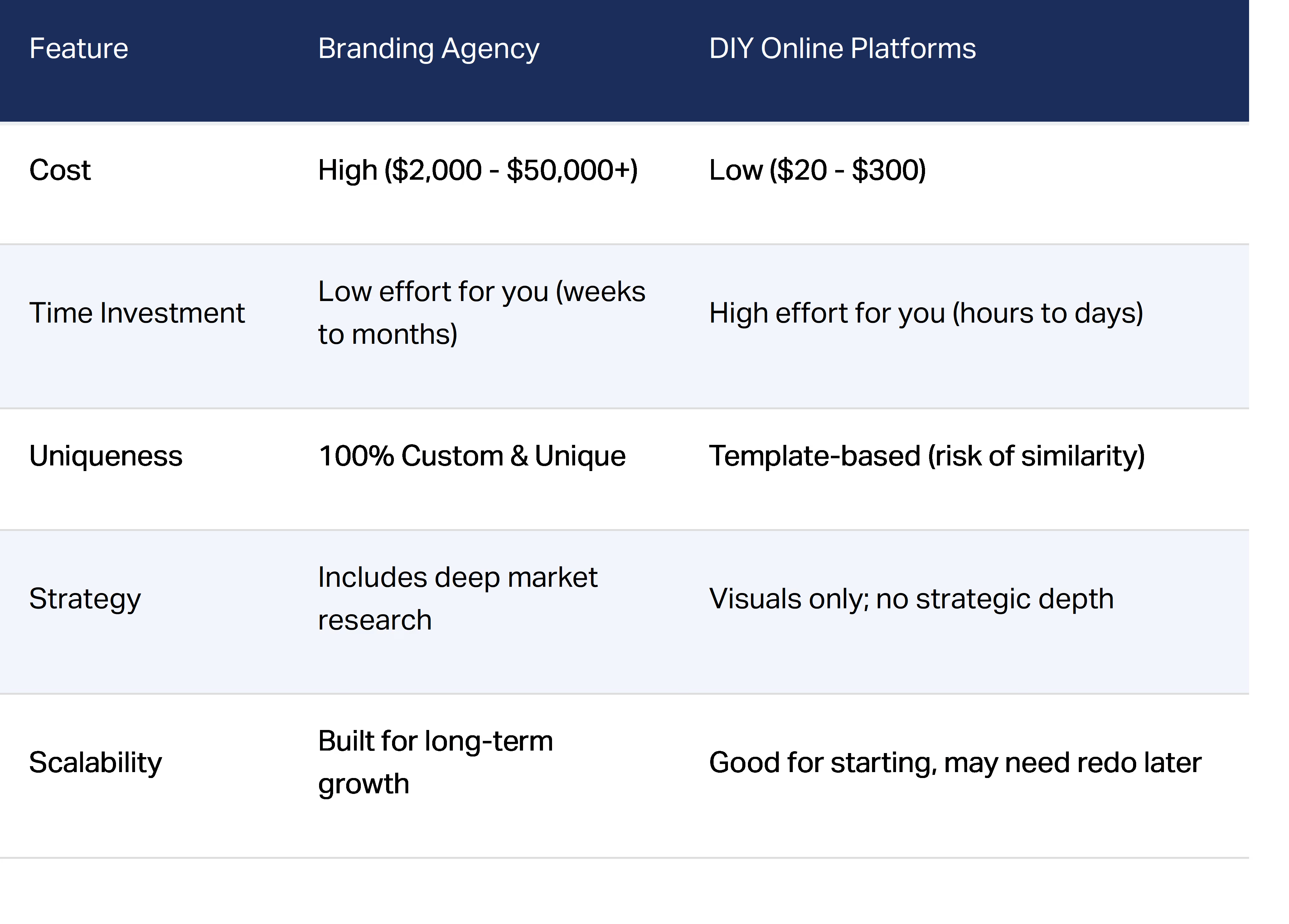
Path1: The Professional Agency
This involves hiring a specialized branding agency or a freelance expert. They conduct market research, define your strategy, and design a bespoke system tailored to your goals. This is a partnership where you pay for expertise and strategic thinking, not just design files.
Agencies bring experience and an external perspective. This is especially valuable if you plan serious international expansion.
Path2: The Digital DIY (Do It Yourself) Approach
This path utilizes modern online tools and platforms that democratize design. These tools use AI and templates to help non-designers create logos, color palettes, and assets quickly and affordably. This is often the starting point for bootstrapped startups.
Today, several digital platforms allow SMEs to develop branding assets more affordably. Some popular tools include:
- Canva – for brand kits, templates, and social media visuals
- Looka – AI-based logo creation
- Wix – website building with branding features
- Squarespace – design-focused website solutions
- Adobe Express –simplified creative tools
These platforms are user-friendly and budget-friendly. They are suitable for early-stage businesses or companies testing new markets.
Let's break down the realities of both options:
Pros & Cons: Branding Agency vs. DIY Online Tools
Create a Consistent Visual System
A study by Lucidpress highlighted a staggering statistic: "Consistent branding can increase revenue by up to 23%." When your messaging and visuals are aligned across all channels, you build recognition faster, meaning you spend less money trying to explain who you are and more time selling.
Consistency is key. Your website, LinkedIn page, business cards, presentations, and packaging should feel connected.
This consistency:
- Improves memorability
- Enhances professionalism
- Builds long-term brand equity
Leverage your social media
Social media is one of the most powerful branding tools for small businesses. It allows you to connect directly with your audience, tell your story, and build a loyal community. However, managing multiple platforms can be time-consuming —which is why smart planning and automation matter.
Why social media matters
Social platforms help you showcase your brand’s personality and values while strengthening customer relationships. A Salesforce research among SMEs shows that 57% of customers prefer to engage with businesses digitally, making social media an essential touchpoint for modern brands.
Practical SMM tips for small businesses:
- Choose the right platforms based on your business industry and needs
- Create a clear posting calendar to stay organized
- Vary your content formats (reels, carousels, stories, polls) to boost engagement
- Use automation tools to schedule posts and save time
- Track performance and adjust based on insights
With the right structure, social media becomes not just a marketing channel, but along-term brand-building asset.
Create Your brand story with AI tools
Story telling in branding should be clear, specific, and audience focused. Use real examples, founder insights, client cases, or behind-the-scenes moments to make the story tangible. Keep your message structured: challenge → solution → transformation. Maintain a consistent tone of voice across platforms and adapt the story format to the channel(short-form for social media, deeper narratives for websites and newsletters).
AI tools SMEs can use for brand storytelling:
- Chat GPT – to structure brand narratives, refine tone of voice, and draft customer stories
- Jasper – for marketing-focused storytelling and campaign messaging
- Copy.ai – for short-form brand stories and social captions
- Canva Magic Write – for visual storytelling combined with design
- Notion AI – to organize brand messaging frameworks and content plans
Used strategically, these tools help SMEs create consistent and compelling brand stories without large marketing teams.
Conclusion
Expanding internationally is a bold move. It requires courage, planning, and resources. But without strong branding, even the best products and services may remain unnoticed.
Branding for small businesses is not about looking bigger than you are. It is about clearly communicating who you are and why you matter.
Key Takeaways
- Branding builds trust and differentiation, especially in unfamiliar international markets.
- Strategy comes before design: define your positioning before creating visual assets.
- Choose the right approach: agency, digital tools, or a hybrid model based on your growth ambitions and resources.
For Armenian SMEs aiming to go global, branding is not optional. It is a strategic foundation for sustainable expansion.


.avif)